The weight becomes the teacher.
Unheavy is not conventional exercise decorated with Daoist language. The principles are placed under load so the body can test them.
The question
How little unnecessary effort can I use?
Weight is the physical fact, and it stays. Heaviness is the internal state, and it goes.
The governing correction
In Unheavy, the transition is the unit of practice, not the movement. The six stations are waypoints. Prototype 0.1 first makes those waypoints safe enough that the seams can later dissolve.
Your first bell: 8 kg / 18 lb
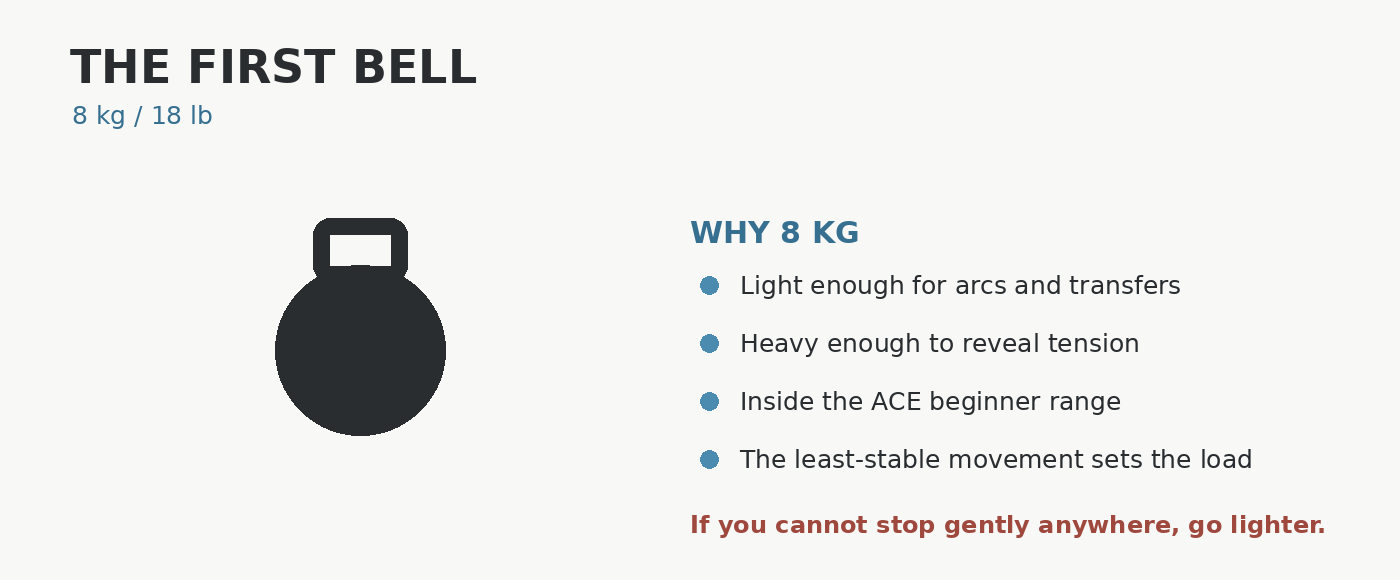
The least stable movement—not the strongest one—determines the research weight.
- Light enough for arcs and transfers
- Heavy enough to reveal tension
- Inside common beginner guidance
- Small enough to guide gently to rest
If you cannot stop gently anywhere, go lighter.
Beginner kettlebell overview ↗Prototype boundaries
Keep it deliberately small
- One light bell
- Below shoulder height
- No ballistic swings
- No blind passes
- No complex hand changes
- Stable, non-slip floor
- People, pets, cords and breakables cleared away
Two tests at every moment
Can you speak a short sentence without gasping?
Can you guide the bell to rest without scrambling or crashing?
Pain, dizziness, chest pressure, loss of balance, numbness or loss of control means stop. This prototype is not medical treatment or rehabilitation.
Root
Kettlebell Deadlift — Hip Hinge Practice
Bristol Kettlebell Club. Watch the stance, reach and pre-lift setup. Root adds a deliberate arrival before the hinge.
Watch conventional mechanics ↗
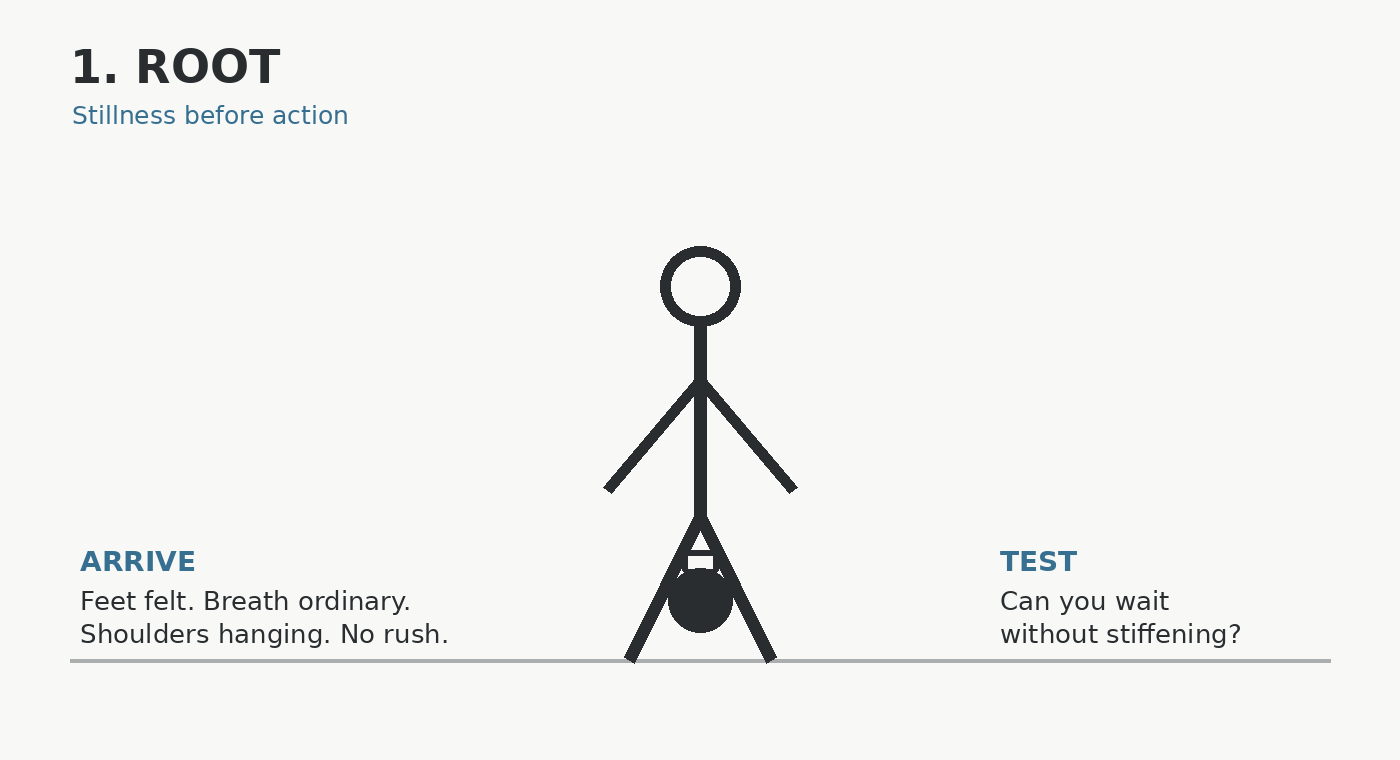
Stable feet, bell close, long spine, hands reaching only after the hips fold.
Stand behind the bell before touching it. Let the breath become ordinary, shoulders hang, and arrival finish before action begins.
Draw from the Well
Kettlebell Deadlift — Hip Hinge Practice
Watch the hinge and rise. Unheavy removes the jerk, dramatic lockout and unnecessary bracing.
Watch conventional mechanics ↗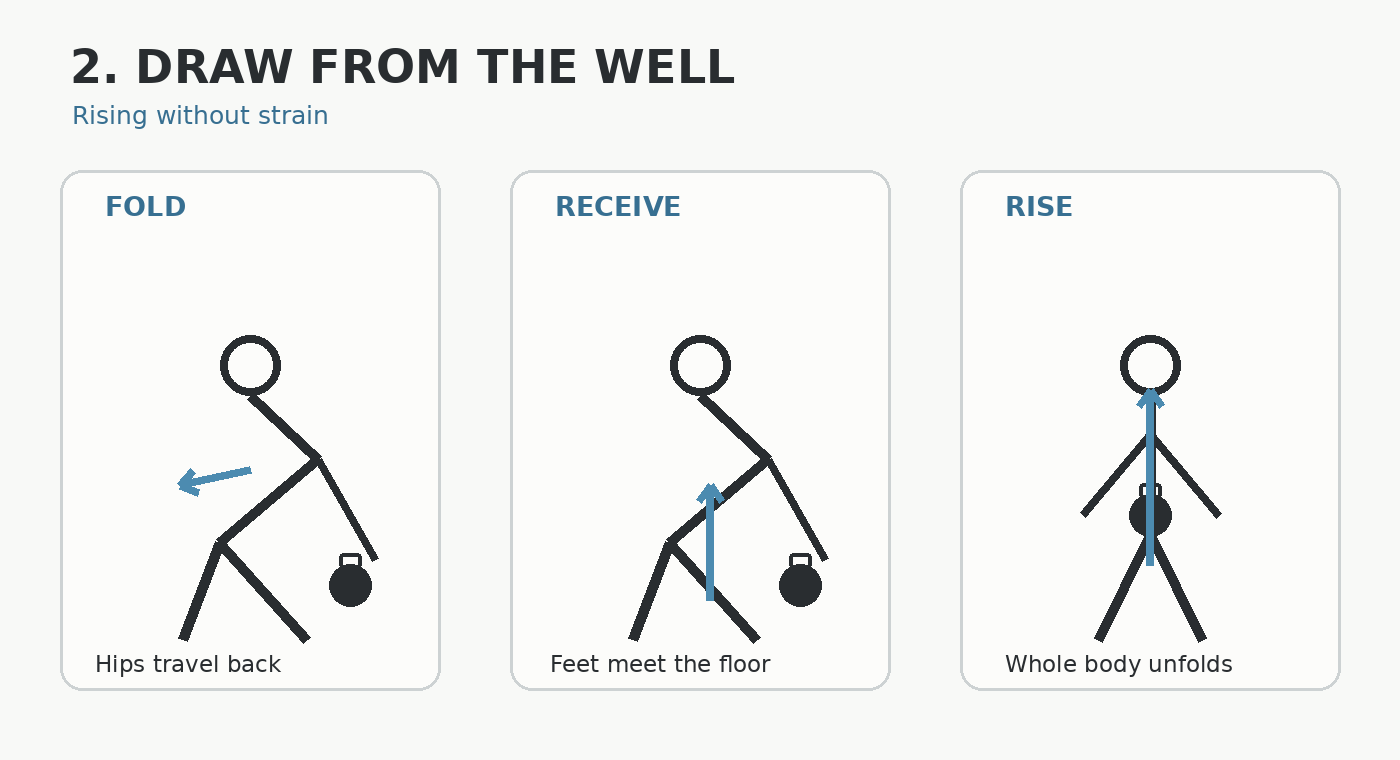
Hips travel back. Back stays long. Bell remains close. Feet, legs and hips produce the rise.
Do not jerk the bell or turn the top into a dramatic lockout. Let the rise pass from the floor through the whole body, with the hands almost late to the event.
Water Turns the Mill
Around the Body Kettlebell Pass
Physitrack. Watch only for the idea of a continuous circular path. Prototype 0.1 uses a two-handed front arc—no blind pass and no hand change.
Watch conventional mechanics ↗
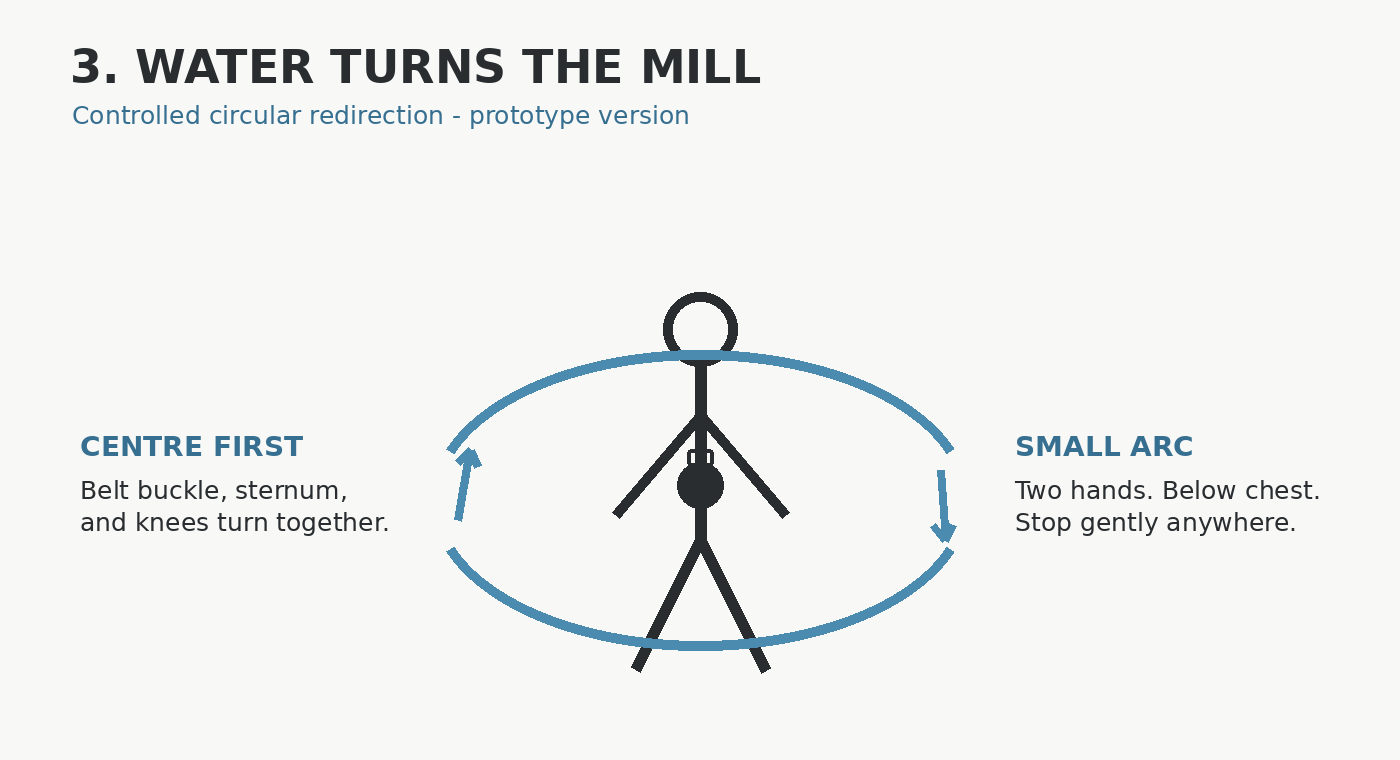
A controlled circular path, balanced stance and continuous bell motion.
Keep both hands on the bell below the sternum. Let the centre turn first, with sternum, belt buckle and knees travelling together through a small arc.
Empty and Full
How to Perform the Kettlebell Side Lunge
Greg Brookes. Watch the side-to-side loading pattern. Unheavy uses a shallow, planted-foot transfer—not a depth-seeking lunge.
Watch conventional mechanics ↗
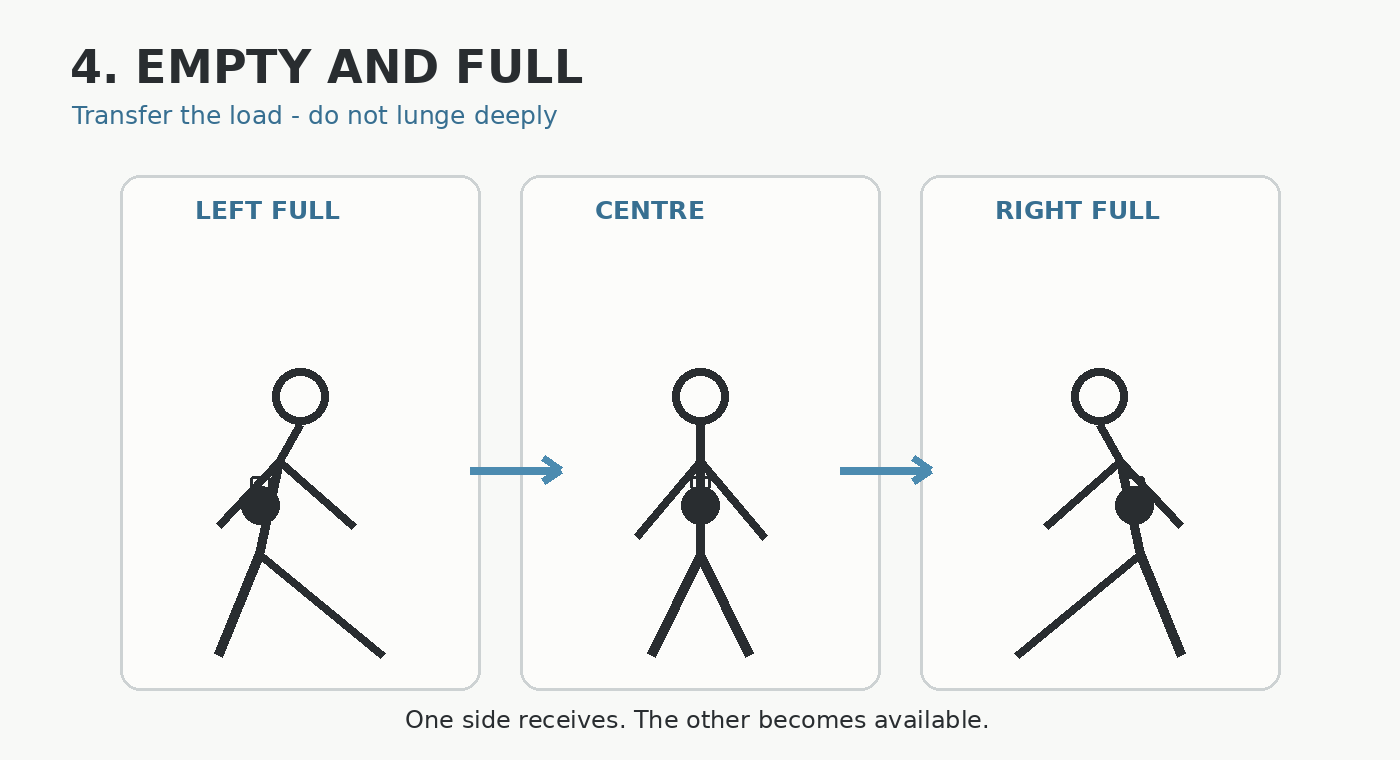
One leg receives the body while the knee tracks with the toes and the spine stays long.
Keep both feet planted, depth shallow and bell close. Let one side become full while the opposite side releases unnecessary tension.
Secure Handover
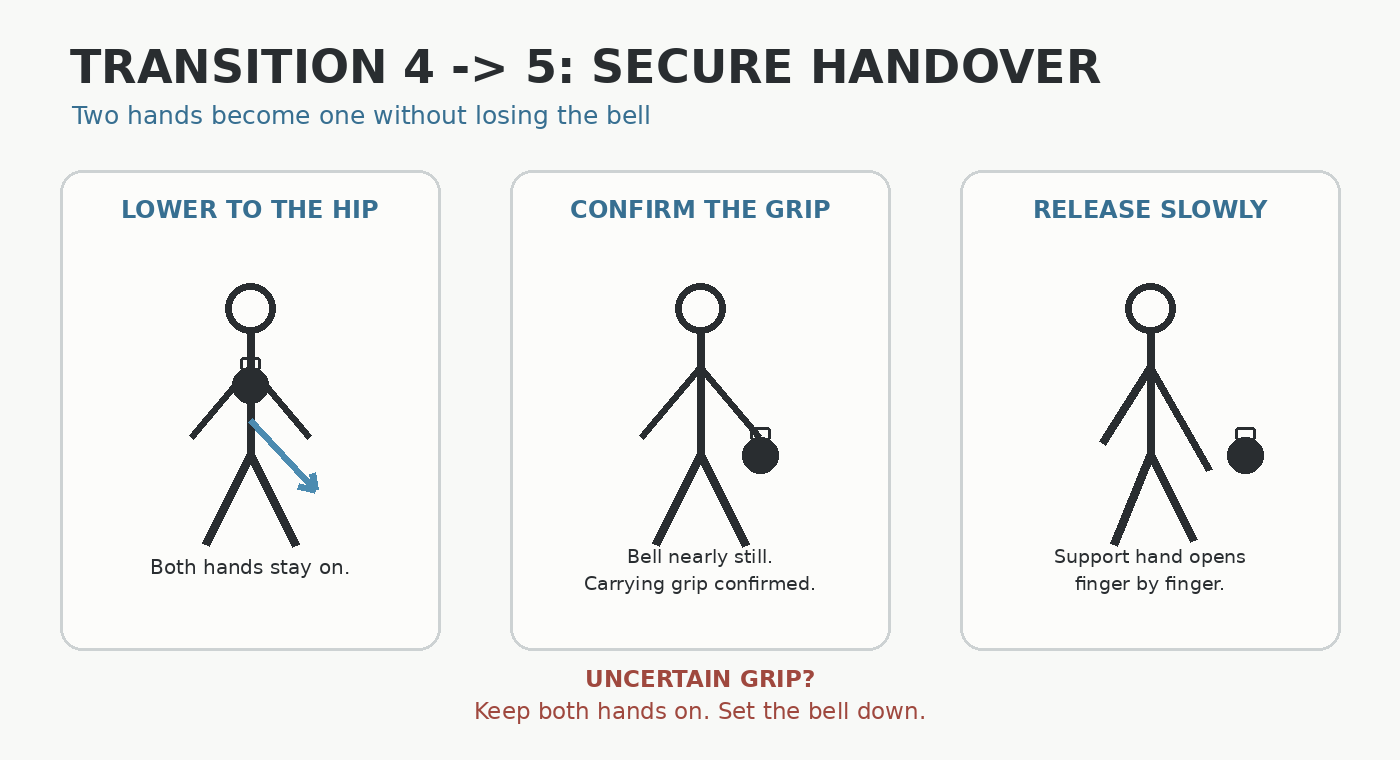
Uncertain grip? Keep both hands on, set the bell down, and begin again.
Carry the Uncarved Block
How to Do the Suitcase Carry with Kettlebells
Jeronimo Milo. Watch the one-sided carry position. Unheavy makes the steps quieter and the body less rigid without allowing a lean.
Watch conventional mechanics ↗
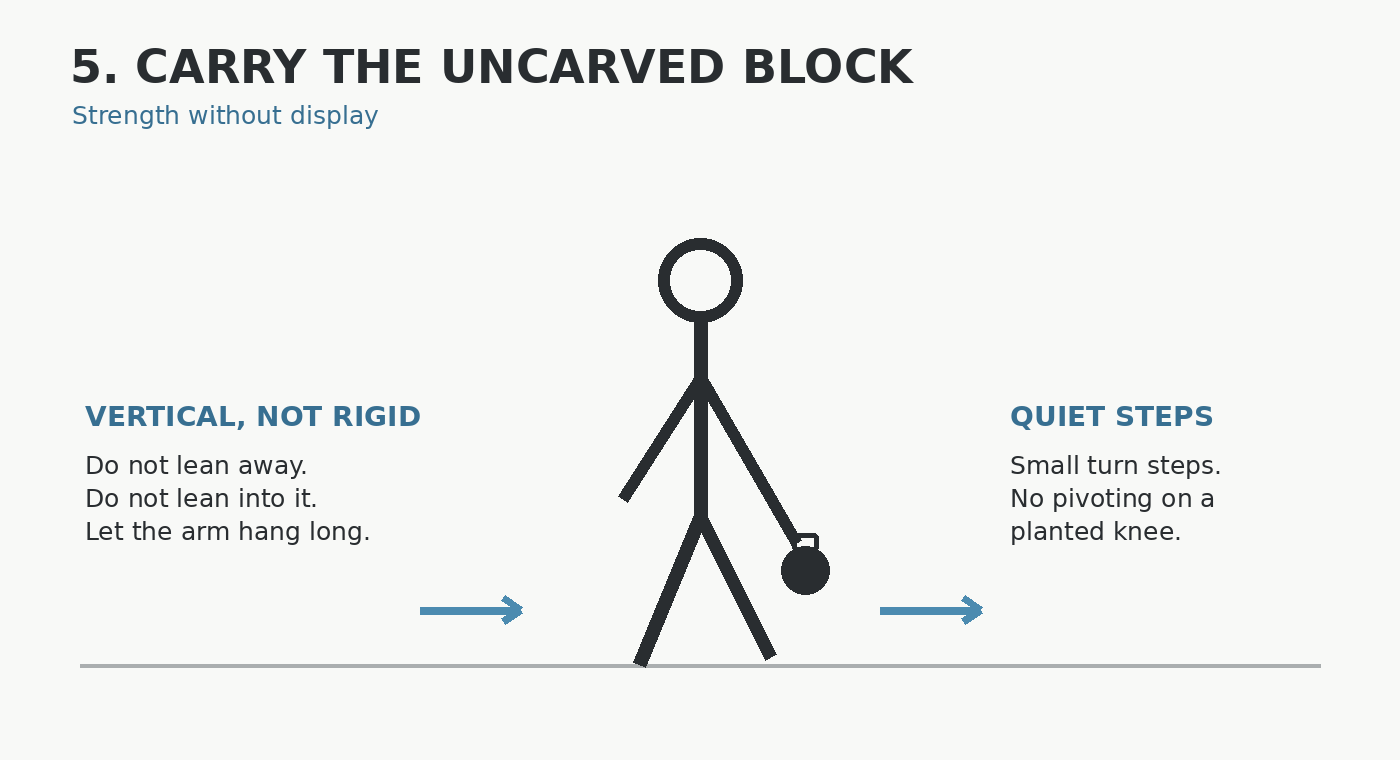
Upright body, bell beside the hip, ribs roughly over pelvis, and deliberate control of the uneven load.
Let the weighted arm hang long, free arm move naturally and steps stay quiet. Turn with several small steps rather than twisting on one foot.
Return to the Valley
Kettlebell Deadlift — Hip Hinge Practice
Watch the hinge and controlled return to the floor. Unheavy continues past touchdown until the body releases the load internally.
Watch conventional mechanics ↗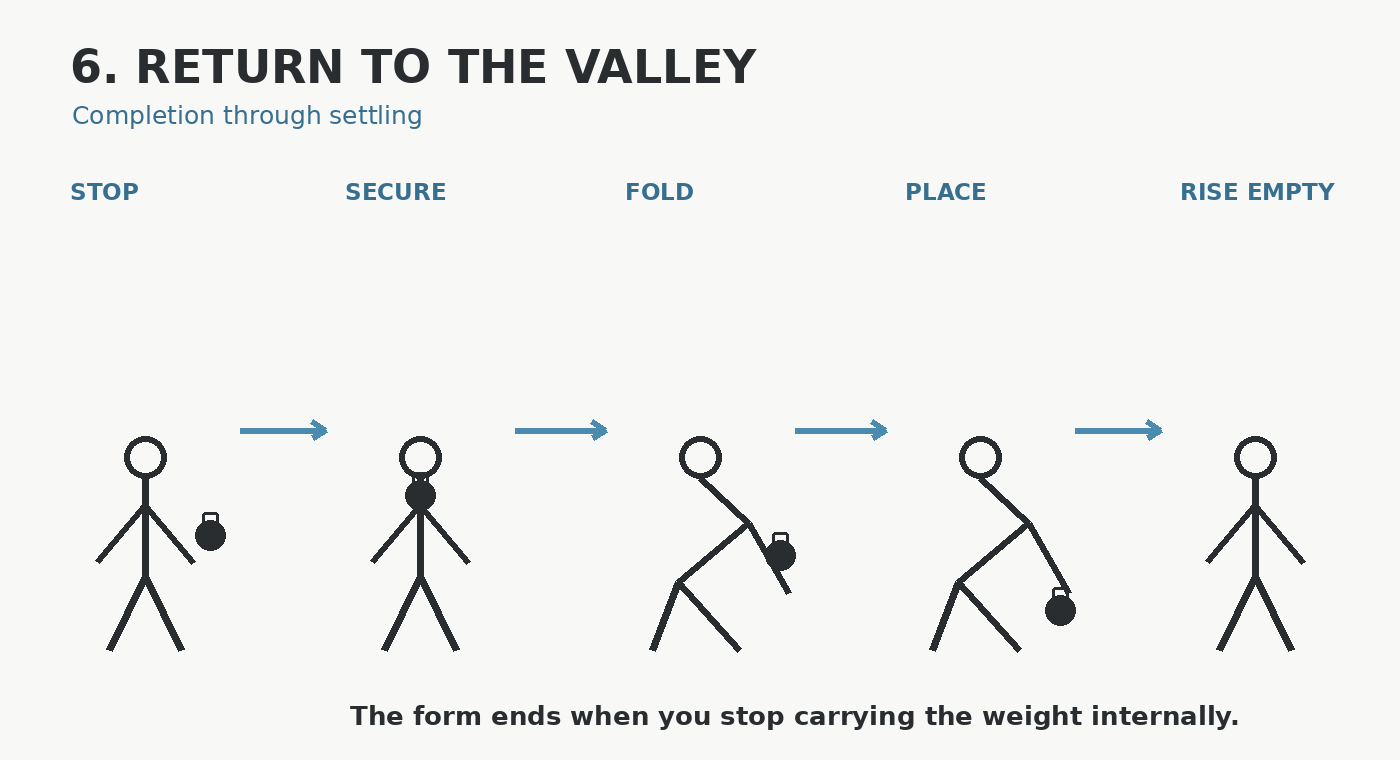
Stop first, secure the bell with both hands, fold through the hips, keep it close and place it under control.
Do not hurry to escape the weight. Release the handle before rising empty, then notice whether your body keeps bracing after the load is gone.
Your first session
Do not begin with a ten-to-twenty-minute continuous form. Prototype 0.1 is an investigation, not a performance.
Component practice
- Practise the hip hinge without a bell.
- Root → Draw from the Well, then set down.
- Two-handed front mill, then set down.
- Shallow Empty and Full transfer, then set down.
- Secure handover separately.
- Suitcase carry on each side.
- Return to the Valley.
First connected passage
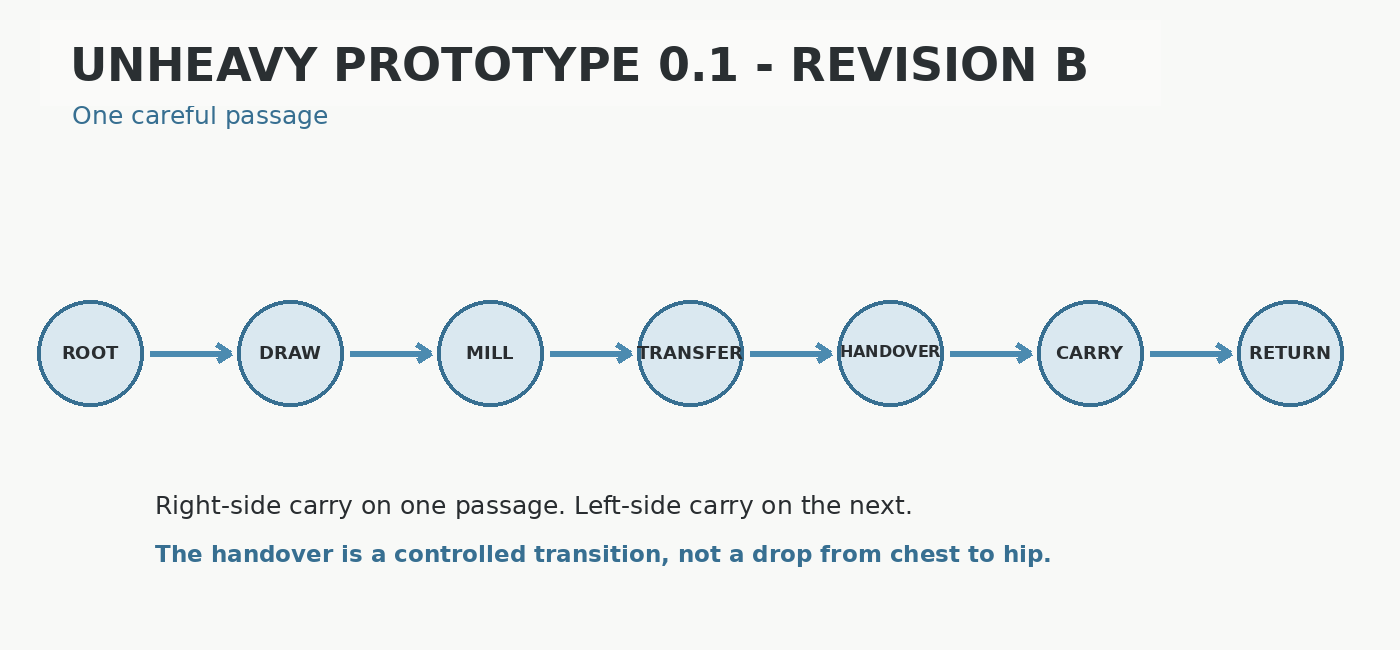
Root → Draw → Mill → Transfer → Secure Handover → Carry → Return.
Perform one right-side carry and one left-side carry. Then stop. Five to eight minutes is enough.
The goal is to discover where the form breaks, not to get tired.
The Unheavy tests
- You can speak a calm sentence.
- Your feet do not stamp.
- Your grip can soften slightly.
- Your shoulders do not rise.
- The bell does not pull you into a hurried step.
- You can interrupt safely anywhere.
- You can place the bell without scrambling.
- You finish at least as organized as you began.
Do not increase the weight first. Make the path smoother, the feet quieter and the handover less visible.